
Journeys
The expeditions, reassembled
Every dated label is a diary entry. Read a collector’s labels in order and the voyage comes back: the islands in sequence, the days at each, the specimens from every stop. 138 journeys so far, 1920 to 1930, 35,125 specimens between them.
70 collectors and expeditions3,296 days in the field498,120 km between stops23,177 photographed specimens
138 journeys match
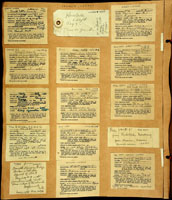
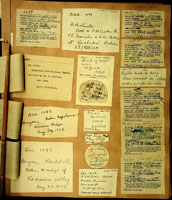
Francis Xavier Williams
Hawaiʻi Island · Jul – Oct 1929
Francis Xavier Williams in Hawaiʻi Island, July – October 192949 specimens · 8 stops · 100 days · 90 km


Edward Leonard Caum
3 islands of the United States · 12–29 Jun 1923
Edward Leonard Caum in Nihoa, French Frigate Shoals and Mokumanamana, 12–29 June 192351 specimens · 8 stops · 18 days · 883 km


Ernest H. Quayle
8 islands · Dec 1921 – Feb 1922
Ernest H. Quayle across 8 islands, December 1921 – February 192246 specimens · 12 stops · 57 days · 6,573 km


C.C. Curtis
6 islands · Apr – May 1922
C.C. Curtis across 6 islands, April – May 192263 specimens · 6 stops · 15 days · 21 km


C.C. Curtis
9 islands of French Polynesia · 5–29 Jun 1922
C.C. Curtis across 9 islands of French Polynesia, 5–29 June 192266 specimens · 9 stops · 25 days


A.M. Stokes
Raivavae · Mar – Apr 1922
A.M. Stokes in Raivavae, March – April 192255 specimens · 6 stops · 37 days


Stanley Ball
Oʻahu · Oct 1925 – Feb 1926
Stanley Ball in Oʻahu, October 1925 – February 192643 specimens · 21 stops · 123 days
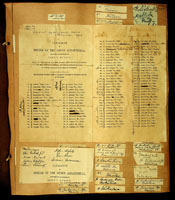
 Alfred F. Judd Jr
3 islands · Feb – Mar 1926
Alfred F. Judd Jr in Tutuila, Lānaʻi and Ofu, February – March 192643 specimens · 6 stops · 46 days · 4,276 km


Edwin Horace Bryan Jr.
Oʻahu · 1–21 Apr 1929
Edwin Horace Bryan Jr. in Oʻahu, 1–21 April 192952 specimens · 5 stops · 21 days · 429 km


Tanager Expedition
10 islands of the United States · Apr – Jun 1923
Tanager Expedition, April – June 192360 specimens · 8 stops · 62 days · 2,174 km


A.G. Whiting
Kauaʻi and Oʻahu · Apr – May 1929
A.G. Whiting in Kauaʻi and Oʻahu, April – May 192947 specimens · 4 stops · 11 days · 254 km


Charles N. Forbes
Oʻahu and Maui · Jan – Feb 1920
Charles N. Forbes in Oʻahu and Maui, January – February 192048 specimens · 3 stops · 28 days · 96 km


C.S. English Jr.
the United States · 2–15 Aug 1925
C.S. English Jr. in the United States, 2–15 August 192543 specimens · 8 stops · 14 days


S. Frank Kajewski
Vanua Lava · 5–18 Jul 1928
S. Frank Kajewski in Vanua Lava, 5–18 July 192847 specimens · 4 stops · 14 days


C.W. Dodge
4 islands of Panama · 3–7 Sep 1925
C.W. Dodge across 4 islands of Panama, 3–7 September 192545 specimens · 3 stops · 5 days


W.J. Vaughn
the United States · 20–30 May 1926
W.J. Vaughn in the United States, 20–30 May 192661 specimens · 3 stops · 11 days
G.N. Jones
the United States · 20–30 May 1926
G.N. Jones in the United States, 20–30 May 192657 specimens · 3 stops · 11 days
J. Thaanum
the United States · 20–30 May 1926
J. Thaanum in the United States, 20–30 May 192654 specimens · 3 stops · 11 days
How a journey is found
Every specimen with a full date and a known collector is a diary entry. The days are read in order; a gap of more than three weeks ends one journey and starts the next. Days spent where a collector lived most of their life are home, not travel, and are left out.
A journey needs at least five days, forty specimens and two places. Within it, a run of days spent within about ten kilometres is one stop; the stop’s point is the middle of the labels that carry coordinates, or the island’s centre when none do.
Companions are the people whose own labels put them in the same place on the same days. Staff can name a journey, write about it and feature it; everything else here is read straight off the specimens, and is rebuilt as the records improve.