
Journeys
The expeditions, reassembled
Every dated label is a diary entry. Read a collector’s labels in order and the voyage comes back: the islands in sequence, the days at each, the specimens from every stop. 207 journeys so far, 1892 to 1995, 45,170 specimens between them.
63 collectors and expeditions3,387 days in the field312,272 km between stops19,870 photographed specimens
207 journeys match


Stanley Ball
Oʻahu · Oct 1925 – Feb 1926
Stanley Ball in Oʻahu, October 1925 – February 192643 specimens · 21 stops · 123 days
Carl Masaru Yoshimoto
the United States · 19–30 Jul 1965
Carl Masaru Yoshimoto in the United States, 19–30 July 1965101 specimens · 6 stops · 12 days
Philip Weber
Aug – Nov 1946
Philip Weber, August – November 194662 specimens · 11 stops · 75 days
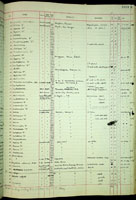
Tsing-Chao Maa
3 countries · Aug – Dec 1958
Tsing-Chao Maa in Malaysia, Singapore and Papua New Guinea, August – December 195850 specimens · 16 stops · 111 days · 7,301 km
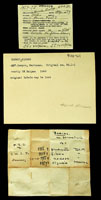

George Butler
Laysan · 20–24 Jul 1959
George Butler in Laysan, 20–24 July 1959193 specimens · 2 stops · 5 days


Wayne C. Gagne
3 islands of the United States · May – Aug 1971
Wayne C. Gagne in Lānaʻi, Hawaiʻi Island and Oʻahu, May – August 197149 specimens · 12 stops · 85 days · 509 km
 Edward Y. Hosaka
Aug – Sep 1936
Edward Y. Hosaka, August – September 1936116 specimens · 4 stops · 9 days
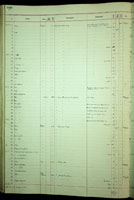


Edwin Horace Bryan Jr.
Oʻahu · 1–21 Apr 1929
Edwin Horace Bryan Jr. in Oʻahu, 1–21 April 192952 specimens · 5 stops · 21 days · 429 km
J. Nishioka
the United States · Jul – Sep 1977
J. Nishioka in the United States, July – September 197755 specimens · 13 stops · 55 days
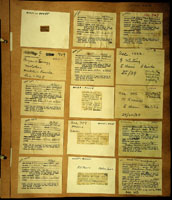
Edwin Horace Bryan Jr.
Molokaʻi · 18–23 Dec 1925
Edwin Horace Bryan Jr. in Molokaʻi, 18–23 December 192594 specimens · 3 stops · 6 days · 2 km
Judson Linsley Gressitt
New Caledonia · Jan – Mar 1972
Judson Linsley Gressitt in New Caledonia, January – March 197251 specimens · 14 stops · 81 days · 1,654 km
Donald Anderson
Oʻahu · Dec 1938 – Jan 1939
Donald Anderson in Oʻahu, December 1938 – January 193984 specimens · 2 stops · 9 days

Wayne C. Gagne
Hawaiʻi Island and Maui · Jun – Aug 1980
Wayne C. Gagne in Hawaiʻi Island and Maui, June – August 198051 specimens · 14 stops · 65 days · 122 km
Philip Weber
Jan – Feb 1953
Philip Weber, January – February 195392 specimens · 4 stops · 43 days
R.T. Hansen
Jul – Aug 1966
R.T. Hansen, July – August 1966106 specimens · 3 stops · 42 days
Walter M. Giffard
Jan – Feb 1915
Walter M. Giffard, January – February 1915104 specimens · 4 stops · 15 days
Francis G. Howarth
Dec 1980 – Jan 1981
Francis G. Howarth, December 1980 – January 198161 specimens · 9 stops · 43 days
Walter M. Giffard
the United States · Dec 1918 – Jan 1919
Walter M. Giffard in the United States, December 1918 – January 191973 specimens · 6 stops · 24 days


Wayne C. Gagne
Maui · Nov 1980 – Jan 1981
Wayne C. Gagne in Maui, November 1980 – January 198145 specimens · 13 stops · 69 days
Dan A. Polhemus
the United States · Mar – May 1993
Dan A. Polhemus in the United States, March – May 199348 specimens · 13 stops · 49 days
Larry W. Quate
Malaysia and the United States · Jul – Aug 1958
Larry W. Quate in Malaysia and the United States, July – August 195853 specimens · 9 stops · 60 days
Otto Herman Swezey
the United States · Oct – Dec 1922
Otto Herman Swezey in the United States, October – December 192254 specimens · 8 stops · 62 days
John Colburn Bridwell
Oʻahu · Apr – Jun 1919
John Colburn Bridwell in Oʻahu, April – June 191940 specimens · 10 stops · 78 days
Walker
Maui · Jun – Jul 1919
Walker in Maui, June – July 191945 specimens · 3 stops · 39 days
How a journey is found
Every specimen with a full date and a known collector is a diary entry. The days are read in order; a gap of more than three weeks ends one journey and starts the next. Days spent where a collector lived most of their life are home, not travel, and are left out.
A journey needs at least five days, forty specimens and two places. Within it, a run of days spent within about ten kilometres is one stop; the stop’s point is the middle of the labels that carry coordinates, or the island’s centre when none do.
Companions are the people whose own labels put them in the same place on the same days. Staff can name a journey, write about it and feature it; everything else here is read straight off the specimens, and is rebuilt as the records improve.