Explore/Pacific Center for Molecular Biodiversity
Pacific Center for Molecular Biodiversity
A genomics research lab and cryorepository built for modern museum biodiversity research.
90,000+
tissue, DNA, and RNA samples
200,000
sample capacity across −20 °C, −96 °C, and liquid nitrogen storage
1 of few
clean rooms in the Pacific available for ancient DNA work
Safeguarding genetic heritage
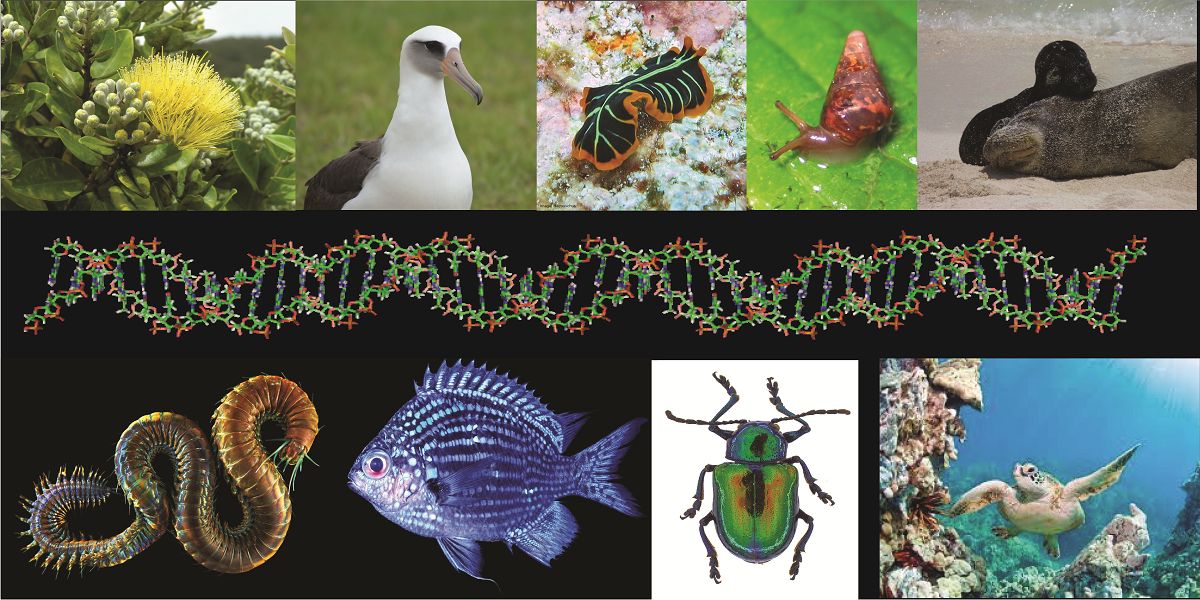
PCMB is the primary cryorepository for the Museum and one of the only cryorepositories dedicated to non-human specimens in the state, housing samples from marine, terrestrial, and freshwater organisms throughout the Pacific — many representing threatened, endangered, or extinct species. The aim: a genetic representative of every species found in Hawai‘i, focusing on the taxa most threatened with extinction.
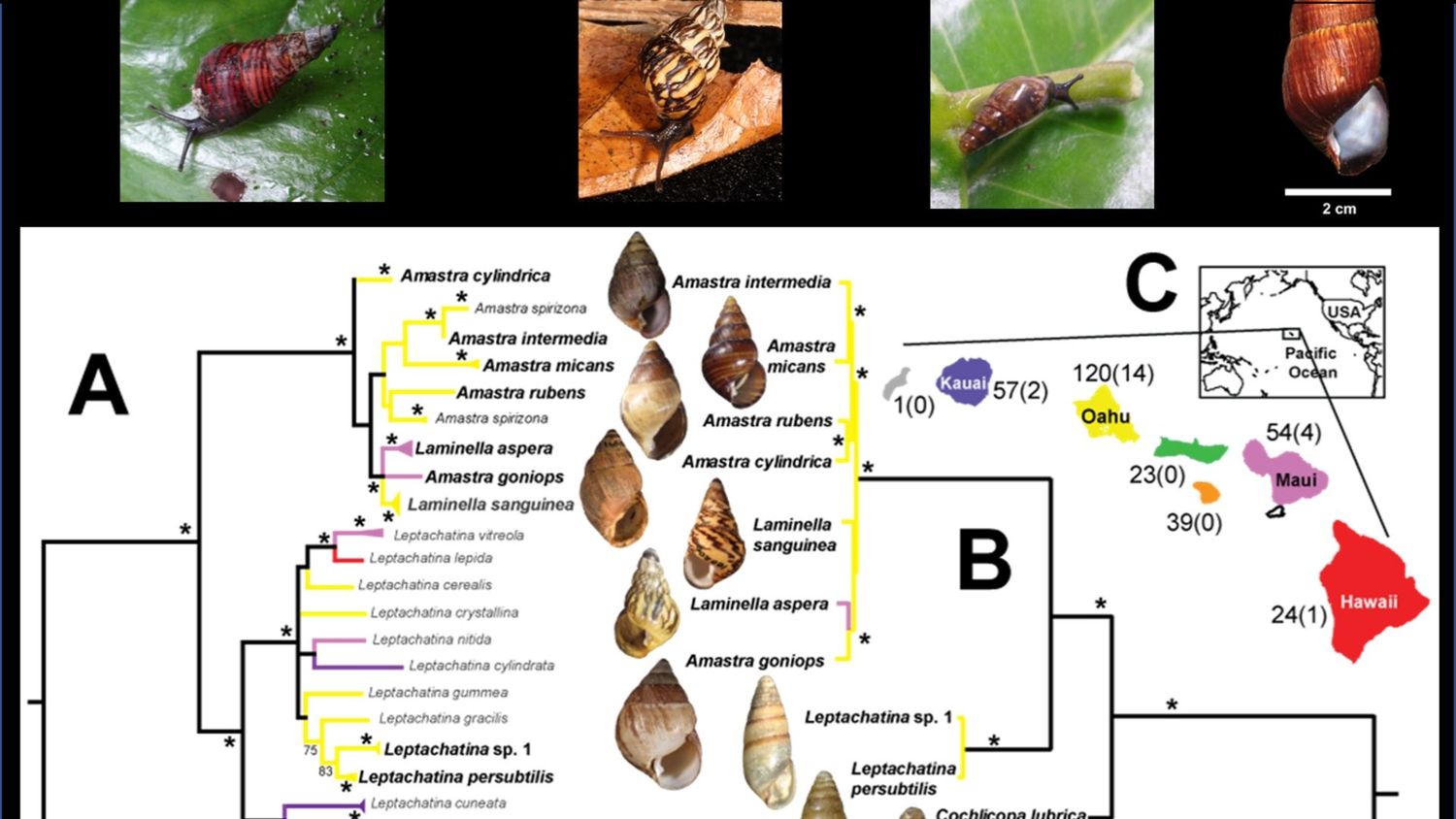
Staff carry out wildlife forensics, conservation and population genetics, biosecurity analysis, parentage studies, pathogen detection, and evolutionary research, informing action and policy for state, federal, and non-governmental agencies. Next-generation sequencing lets researchers tap the Museum’s historical collections to reconstruct relationships of Hawai‘i taxa — including long-extinct species like the endemic amastrid snails.
Sequencing the Museum's invertebrate collections at the Pacific Center for Molecular Biodiversity.Open on YouTube
Research
6 publications
Papers, reports and books by Pacific Center for Molecular Biodiversity staff, with the PDF where there is one — readable in place and open to questions.
All Pacific Center for Molecular Biodiversity publications ›2026
Hidden in Plain Sight: A Novel Symbiotic Haplosclerid Sponge Species Revealed by its Mitochondrial GenomeKhaki, M.A., Vicente, J., Hill, R.T., Lavrov, D.V. · Journal of Evolutionary Biology
2024
Phylogenetic reconstruction illuminates the evolutionary history of freshwater to marine transition in the subfamily Haloveliinae (Hemiptera: Heteroptera: Veliidae)Ye, Z., Z.Z. Jin, D.A. Polhemus, S.Q. Wang, S.Y. Fu, H.H. Yang, M. Qiao, and W.J. Bu · Systematic Entomology
2023
Molecular and phylogenetic datasets for the Asterophryinae frogs of New Guinea with additional data on lifestyle, geography, and elevationHill, E.C., M.J. Jarman, C.J. Fraser, D.F. Gao, E.R. Henry, A.R. Fisher, B. Iova, A. Allison, and M.A. Butler · Data in Brief
2022
Resolving the deep phylogeny: Implications for early adaptive radiation, cryptic, and present-day ecological diversity of Papuan microhylid frogsHill, E.C., C.J. Fraser, D.F. Gao, M.J. Jarman, E.R. Henry, B. Iova, A. Allison, and M.A. Butler · Molecular Phylogenetics and Evolution
2022
Phylogenetic systematics and distribution of Pomacea sordida (Swainson, 1823) and Pomacea intermedia (Férussac, in Quoy & Gaimard, 1825) (Caenogastropoda: Ampullariidae)Barbosa, K.P., K.A. Hayes, R. Do V. Vilela, H.S. Barbosa, C.R. Marchi, and S.C. Thiengo · Malacologia
2022
Transcriptome-based Phylogeny of the Semi-aquatic Bugs (Hemiptera: Heteroptera: Gerromorpha) Reveals Patterns of Lineage Expansion in a Series of New Adaptive ZonesArmisén, D., S. Viala, I.d.R.S. Cordeiro, A.J.J. Crumière, E. Hendaoui, A. Le Bouquin, W. Duchemin, E. Santos, W. Toubiana, A. Vargas-Lowman, C.F. Burguez Floriano, D.A. Polhemus, Y.-h. Wang, L. Rowe, F.F.F. Moreira, and A. Khila · Molecular Biology and Evolution
In the lab
Research
Hawai‘i Barcode of Life
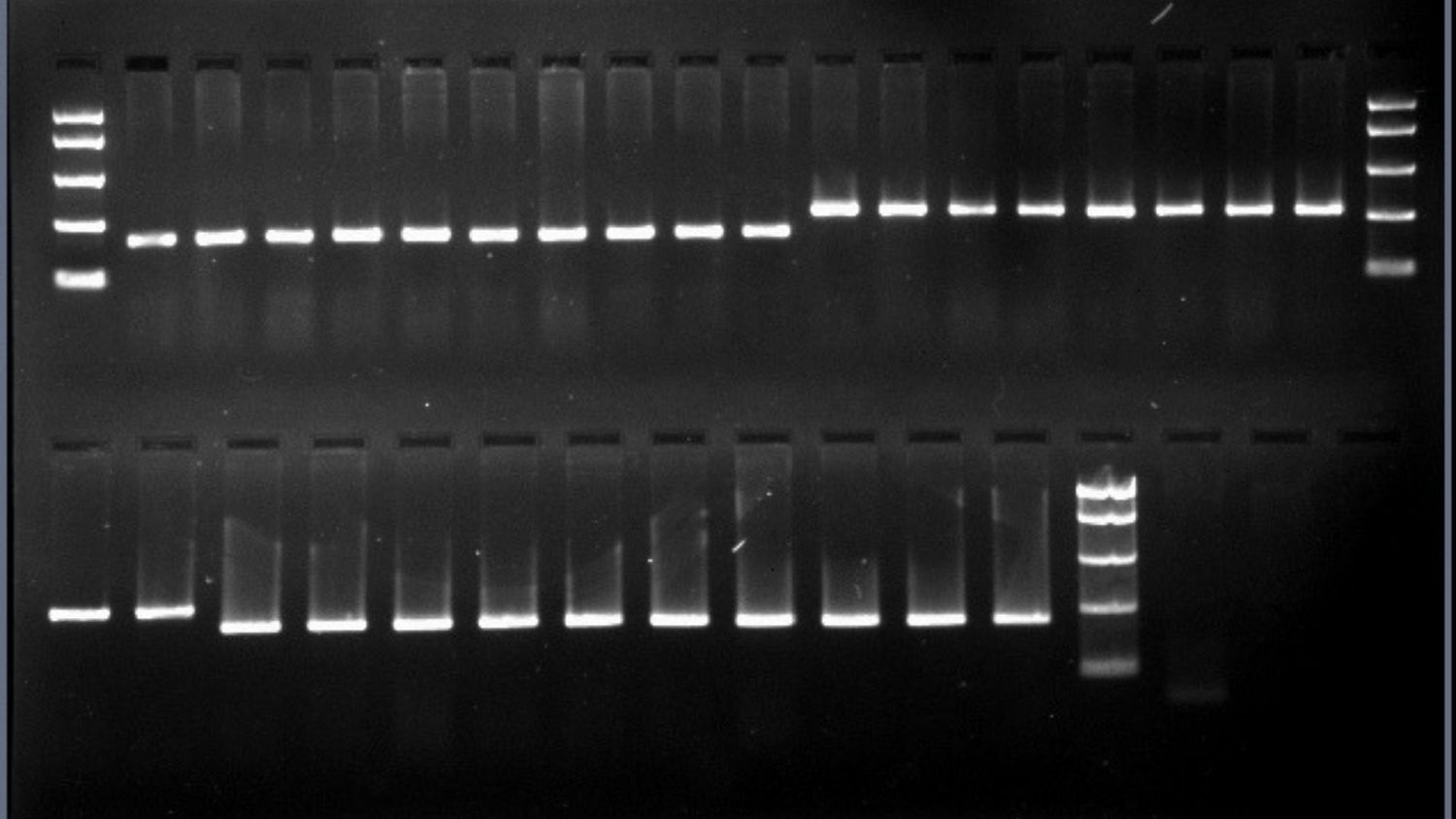
As part of the All Species Hawai‘i initiative and the Hawai‘i Biological Survey, the Hawai‘i Barcode of Life project aims to produce a DNA sequence for all plants and animals in Hawai‘i — complementing more than 22 million vouchered natural history specimens with molecular identification. Once inventoried, PCMB’s genetic resources are shared through the Global Genome Biodiversity Network, the Barcode of Life Databases, and PILSBRy.
Staff
1 people
- SH
Samantha H. Shizuru, M.S.
Collections Manager, PCMB
808-847-8217
samantha.shizuru@bishopmuseum.org
Contact
PCMB collaborates with partners across Hawai‘i, including the University of Hawai‘i, DLNR, the Hawai‘i Department of Agriculture, Pacific Rim Conservation, USDA, and USFWS. Phone: 808-847-8217.
samantha.shizuru@bishopmuseum.orgBe a part of our story
Celebrate the extraordinary history, culture, and environment of Hawaiʻi and the Pacific with a gift to Bishop Museum. As a partner in the Museum’s work, you help sustain the collections, the research and the knowledge behind every record on this site.