
Domecia hispida
Shaggy Domecia
Eydoux & Souleyet, 1842Accepted name in the World Register of Marine Species.WoRMS 209146 ↗
75
Bishop specimens
0
Type specimens
—
First collected
—
Last collected
2026
Last seen alive in Hawaiʻi
In the Library
Bishop Museum publications whose pages name Domecia hispida, most mentions first.
2002
Nonindigenous marine species at Waikiki and Hawaii Kai, O‘ahu, Hawai‘iColes, S.L., R.C. DeFelice & L.G. Eldredge · Contribution to the Hawaii Biological Survey · 4 pages
2006
Inventory of intertidal and shallow subtidal marine invertebrates at Kalaupapa National Historical Park, Moloka`i, Hawai`iGodwin, S. & Bolick, H. · Contribution to the Hawaii Biological Survey · 2 pages
2002
Nonindigenous marine species in Kane‘ohe Bay, O‘ahu, Hawai‘iColes, S.L., R.C. DeFelice & L.G. Eldredge · Contribution to the Hawaii Biological Survey · 2 pages
1999
Nonindigenous marine species introductions in the harbors of the south and west shores of Oahu, HawaiiColes, S.L., R.C. DeFelice, & L.G. Eldredge · Contribution to the Hawaii Biological Survey · 2 pages
2010
Marine biota information base for offshore islets in the main Hawaiian IslandsColes, S.L. & Swenson, C. · Contribution to the Hawaii Biological Survey · 1 page
2008
Assessment of species composition, diversity and biomass in marine habitats and subhaqbitats around offshore islets in the main Hawaiian IslandsColes, S.L., Giuseffi, L. & Hutchinson, M. · Contribution to the Hawaii Biological Survey · 1 page
2002
Records of shallow-water marine invertebrates from French Frigate Shoals, Northwestern Hawaiian Islands with a note on nonindigenous speciesDeFelice, R., D. Minton & S. Godwin · Contribution to the Hawaii Biological Survey · 1 page
2001
Marine species survey of Johnston Atoll, central Pacific Ocean, June 2000Coles, S.L., R.C. DeFelice & D. Minton · Contribution to the Hawaii Biological Survey · 1 page
Where Bishop collected it
15 mapped specimens. Localities of endangered species are shown approximately.
Alive today
9 research-grade iNaturalist sightings in the wild in Hawaiʻi since 2000. Most recent first.
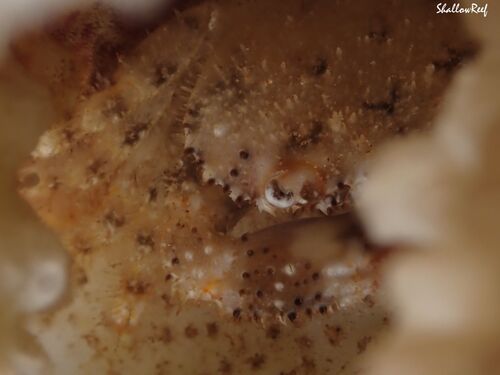
2026-05-31
North Shore, Waialua, HI, USA
(c) Shallow Reef, some rights reserved (CC BY-NC)
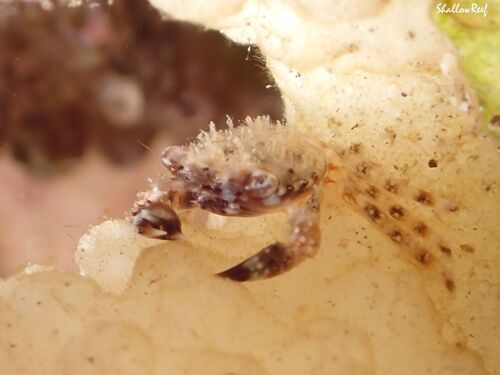
2025-03-22
Honolulu County, HI, USA
(c) Shallow Reef, some rights reserved (CC BY-NC)
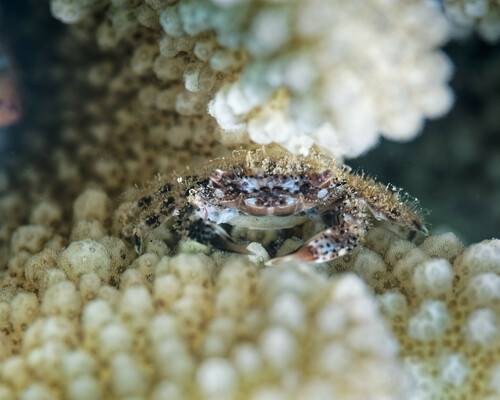
2024-07-13
Pupukea, HI 96712, USA
(c) David R, some rights reserved (CC BY-NC)
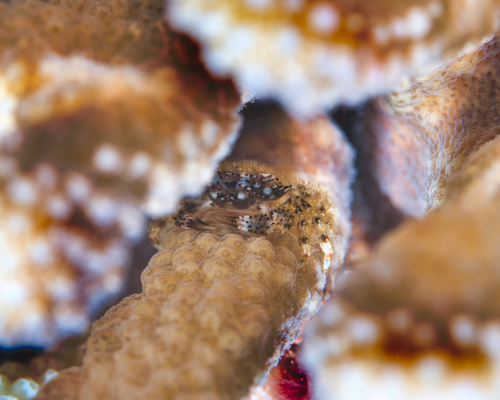
2022-07-16
Pupukea, HI 96712, USA
(c) David R, some rights reserved (CC BY-NC)
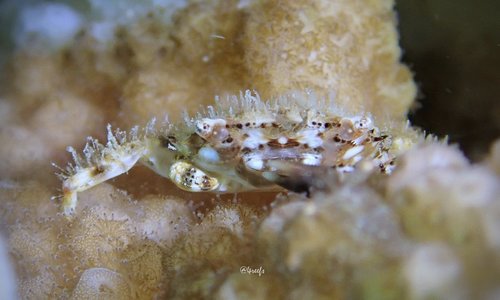
2022-02-12
Hawaii, US
(c) D. Torres-Pulliza, some rights reserved (CC BY-NC)
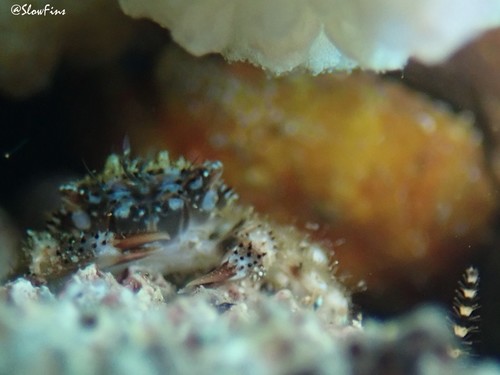
2021-04-10
Honolulu County, US-HI, US
(c) Shallow Reef, some rights reserved (CC BY-NC)
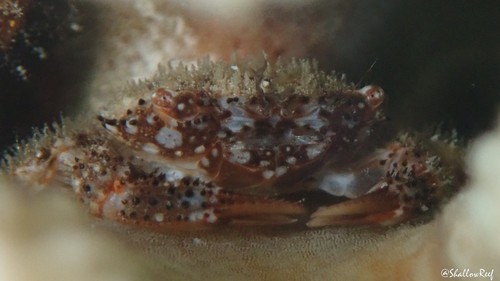
2020-03-04
84-369 Farrington Hwy, Waianae, HI 96792, USA
(c) Shallow Reef, some rights reserved (CC BY-NC)
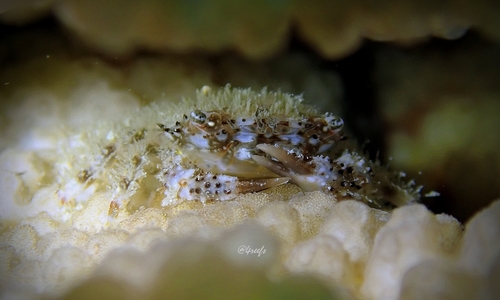
2020-01-18
Sand Island
(c) D. Torres-Pulliza, some rights reserved (CC BY-NC)