
Journeys
The expeditions, reassembled
Every dated label is a diary entry. Read a collector’s labels in order and the voyage comes back: the islands in sequence, the days at each, the specimens from every stop. 21 journeys so far, 1960 to 1969, 4,660 specimens between them.
15 collectors and expeditions554 days in the field255,944 km between stops1,699 photographed specimens
21 journeys match
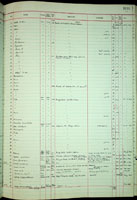

Johnson Randall
25 islands · Mar – Dec 1968
Johnson Randall across 25 islands, March – December 19681,676 specimens · 99 stops · 261 days · 106,577 km


Grady L. Webster
10 islands · Jun – Sep 1968
Grady L. Webster across 10 islands, June – September 1968510 specimens · 60 stops · 111 days · 38,525 km


B.G. Decker
8 islands · Jan – Jun 1964
B.G. Decker across 8 islands, January – June 1964346 specimens · 39 stops · 147 days · 2,052 km


M.-H Sachet
6 islands · Jul – Nov 1963
M.-H Sachet across 6 islands, July – November 1963308 specimens · 22 stops · 118 days · 9,873 km


B.G. Decker
Hiva Oa and Hivaoa · Sep – Dec 1963
B.G. Decker in Hiva Oa and Hivaoa, September – December 1963250 specimens · 26 stops · 83 days


H.O. Whittier
3 islands of French Polynesia · Sep – Nov 1964
H.O. Whittier in Tahiti, Moorea and Taiarapu, September – November 1964131 specimens · 23 stops · 75 days · 43 km


Jan Newhouse
6 islands · Dec 1968 – Feb 1969
Jan Newhouse across 6 islands, December 1968 – February 1969162 specimens · 13 stops · 62 days · 4,798 km


van Royen
3 islands · Jun – Sep 1967
van Royen in Oʻahu, Kauaʻi and Moorea, June – September 1967147 specimens · 11 stops · 80 days · 8,799 km


Jan Newhouse
3 islands of French Polynesia · 2–24 Aug 1967
Jan Newhouse in Tahiti, Bora Bora and Moorea, 2–24 August 1967139 specimens · 18 stops · 23 days · 941 km


 Edwin Smith
Moorea · Jun – Aug 1967
Edwin Smith in Moorea, June – August 1967147 specimens · 26 stops · 69 days


Jan Newhouse
5 islands · Jul – Aug 1968
Jan Newhouse across 5 islands, July – August 196898 specimens · 10 stops · 50 days · 6,701 km


P.F. Hunt
6 islands · Jul – Nov 1965
P.F. Hunt across 6 islands, July – November 196569 specimens · 35 stops · 147 days · 15,687 km


W.T. Brooks
Manihi · Apr – Jun 1967
W.T. Brooks in Manihi, April – June 1967101 specimens · 22 stops · 71 days
C.C. Brooks
Manihi · Apr – Jun 1967
C.C. Brooks in Manihi, April – June 1967101 specimens · 22 stops · 71 days

Charles Walters
Tahiti and Oʻahu · May – Sep 1967
Charles Walters in Tahiti and Oʻahu, May – September 1967110 specimens · 14 stops · 126 days · 8,847 km


B.G. Decker
5 islands of French Polynesia · Jan – Apr 1960
B.G. Decker across 5 islands of French Polynesia, January – April 196069 specimens · 12 stops · 67 days · 865 km
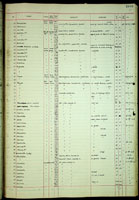
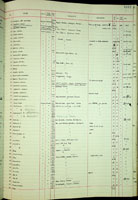
Noel Louis Hilmer Krauss
4 islands · Jan – Feb 1962
Noel Louis Hilmer Krauss across 4 islands, January – February 196257 specimens · 12 stops · 30 days · 22,109 km


Noel Louis Hilmer Krauss
7 islands · Jan – Mar 1960
Noel Louis Hilmer Krauss across 7 islands, January – March 196057 specimens · 7 stops · 58 days · 16,910 km


Noel Louis Hilmer Krauss
5 islands · Jan – Feb 1961
Noel Louis Hilmer Krauss across 5 islands, January – February 196149 specimens · 14 stops · 40 days · 5,401 km
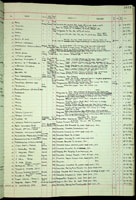

Dennis M. Devaney
16 islands · Sep – Oct 1967
Dennis M. Devaney across 16 islands, September – October 196750 specimens · 18 stops · 56 days · 7,816 km


Walter Hambuechen
3 islands of French Polynesia · 1–5 Dec 1960
Walter Hambuechen in Rurutu, Tubuai and Raivavae, 1–5 December 196083 specimens · 3 stops · 5 days
How a journey is found
Every specimen with a full date and a known collector is a diary entry. The days are read in order; a gap of more than three weeks ends one journey and starts the next. Days spent where a collector lived most of their life are home, not travel, and are left out.
A journey needs at least five days, forty specimens and two places. Within it, a run of days spent within about ten kilometres is one stop; the stop’s point is the middle of the labels that carry coordinates, or the island’s centre when none do.
Companions are the people whose own labels put them in the same place on the same days. Staff can name a journey, write about it and feature it; everything else here is read straight off the specimens, and is rebuilt as the records improve.