
Journeys
The expeditions, reassembled
Every dated label is a diary entry. Read a collector’s labels in order and the voyage comes back: the islands in sequence, the days at each, the specimens from every stop. 129 journeys so far, 1930 to 1940, 32,997 specimens between them.
61 collectors and expeditions2,281 days in the field303,489 km between stops27,629 photographed specimens
129 journeys match


Erling Christophersen
Oʻahu · May – Jun 1930
Erling Christophersen in Oʻahu, May – June 193070 specimens · 5 stops · 37 days · 125 km


Harold St.John
3 islands of the United States · Jan – Mar 1939
Harold St.John in Kauaʻi, Oʻahu and Molokaʻi, January – March 193958 specimens · 8 stops · 34 days · 540 km


 E. Ordonez
Oʻahu · Mar – Jun 1939
E. Ordonez in Oʻahu, March – June 193941 specimens · 12 stops · 90 days · 315 km


Otto Degener
Kauaʻi and Oʻahu · Dec 1939 – Jan 1940
Otto Degener in Kauaʻi and Oʻahu, December 1939 – January 194046 specimens · 12 stops · 36 days · 254 km


V.O. Fosberg
Oʻahu · Mar – May 1937
V.O. Fosberg in Oʻahu, March – May 193749 specimens · 8 stops · 71 days


Michael Martinez
Oʻahu · Mar – Apr 1936
Michael Martinez in Oʻahu, March – April 193650 specimens · 9 stops · 39 days · 294 km


R. Masuhara
Kauaʻi · Dec 1930 – Jan 1931
R. Masuhara in Kauaʻi, December 1930 – January 193159 specimens · 8 stops · 15 days
J.C. Lindsay
Kauaʻi · Dec 1930 – Jan 1931
J.C. Lindsay in Kauaʻi, December 1930 – January 193159 specimens · 8 stops · 15 days
W. Wong
Kauaʻi · Dec 1930 – Jan 1931
W. Wong in Kauaʻi, December 1930 – January 193159 specimens · 8 stops · 15 days


 C.E. Hartt
Oʻahu · Jun – Jul 1936
C.E. Hartt in Oʻahu, June – July 193665 specimens · 4 stops · 56 days · 336 km


J.C. Lindsay
Hawaiʻi Island · 21–29 Dec 1931
J.C. Lindsay in Hawaiʻi Island, 21–29 December 193168 specimens · 6 stops · 9 days

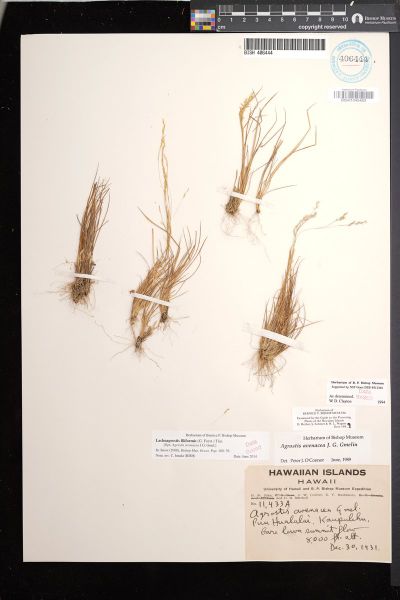
J.W. Coulter
Hawaiʻi Island · 21–31 Dec 1931
J.W. Coulter in Hawaiʻi Island, 21–31 December 193171 specimens · 5 stops · 11 days


F. Salucop
Oʻahu · Feb – Apr 1937
F. Salucop in Oʻahu, February – April 193747 specimens · 8 stops · 52 days


C.E. Hartt
Oʻahu · Jul – Aug 1938
C.E. Hartt in Oʻahu, July – August 193850 specimens · 8 stops · 22 days · 291 km


Edwin Horace Bryan Jr.
Hawaiʻi Island and Tutuila · Jul – Aug 1935
Edwin Horace Bryan Jr. in Hawaiʻi Island and Tutuila, July – August 193563 specimens · 7 stops · 41 days · 4,120 km


E. Ordonez
Maui · Jul – Aug 1939
E. Ordonez in Maui, July – August 193942 specimens · 9 stops · 34 days · 195 km
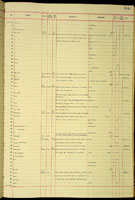
Elwood Curtin Zimmerman
Oʻahu · Jan – Mar 1937
Elwood Curtin Zimmerman in Oʻahu, January – March 193759 specimens · 12 stops · 68 days

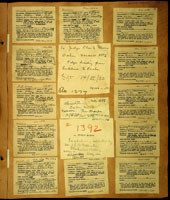

Erling Christophersen
Oʻahu · Mar – Apr 1930
Erling Christophersen in Oʻahu, March – April 193053 specimens · 4 stops · 37 days


E.S.C. Handy
Maui · Jun – Jul 1933
E.S.C. Handy in Maui, June – July 193341 specimens · 8 stops · 45 days · 136 km


R.W. Baxter
Molokaʻi · Dec 1938 – Jan 1939
R.W. Baxter in Molokaʻi, December 1938 – January 193966 specimens · 4 stops · 7 days · 37 km


Marie Catherine Neal
Kauaʻi and Babeldaob Island · 7–21 Aug 1936
Marie Catherine Neal in Kauaʻi and Babeldaob Island, 7–21 August 193651 specimens · 7 stops · 15 days


Harold St.John
Oʻahu · 10–31 Mar 1935
Harold St.John in Oʻahu, 10–31 March 193565 specimens · 3 stops · 22 days
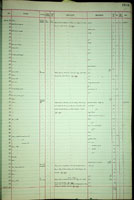
Donald Anderson
Oʻahu · 5–14 Feb 1939
Donald Anderson in Oʻahu, 5–14 February 193989 specimens · 2 stops · 10 days · 23 km
Maxwell S. Doty
the United States · Apr – Sep 1937
Maxwell S. Doty in the United States, April – September 193744 specimens · 19 stops · 157 days
How a journey is found
Every specimen with a full date and a known collector is a diary entry. The days are read in order; a gap of more than three weeks ends one journey and starts the next. Days spent where a collector lived most of their life are home, not travel, and are left out.
A journey needs at least five days, forty specimens and two places. Within it, a run of days spent within about ten kilometres is one stop; the stop’s point is the middle of the labels that carry coordinates, or the island’s centre when none do.
Companions are the people whose own labels put them in the same place on the same days. Staff can name a journey, write about it and feature it; everything else here is read straight off the specimens, and is rebuilt as the records improve.