
Journeys
The expeditions, reassembled
Every dated label is a diary entry. Read a collector’s labels in order and the voyage comes back: the islands in sequence, the days at each, the specimens from every stop. 9 journeys so far, 1925 to 1980, 3,626 specimens between them.
9 collectors and expeditions341 days in the field99,574 km between stops2,363 photographed specimens
9 journeys match


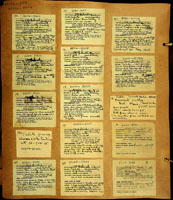
Laurence H. MacDaniels
12 islands · Oct 1926 – Jul 1927
Laurence H. MacDaniels across 12 islands, October 1926 – July 19272,144 specimens · 105 stops · 274 days · 40,135 km


 Truman George Yuncker
6 islands · Sep – Dec 1939
Truman George Yuncker across 6 islands, September – December 1939573 specimens · 26 stops · 81 days · 2,624 km


W. Teraoka
4 islands · Apr 1979 – Mar 1980
W. Teraoka across 4 islands, April 1979 – March 1980183 specimens · 58 stops · 348 days · 23,334 km


Hugh Shaw MacKee
9 islands · Jul – Sep 1955
Hugh Shaw MacKee across 9 islands, July – September 1955222 specimens · 28 stops · 64 days · 5,455 km

Johnson Randall
9 islands · Jul – Oct 1967
Johnson Randall across 9 islands, July – October 1967303 specimens · 29 stops · 95 days · 2,620 km

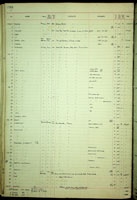

 Gerrit Parmele Wilder
7 islands · Jun – Aug 1925
Gerrit Parmele Wilder across 7 islands, June – August 192552 specimens · 22 stops · 65 days · 10,586 km


Noel Louis Hilmer Krauss
7 islands · Nov 1977 – Feb 1978
Noel Louis Hilmer Krauss across 7 islands, November 1977 – February 197861 specimens · 19 stops · 80 days · 5,557 km


H. Kennedy
3 islands · Aug – Sep 1979
H. Kennedy in Tahiti, Hawaiʻi Island and Upolu, August – September 197942 specimens · 11 stops · 33 days · 6,642 km


M.-H Sachet
4 islands · Jun – Jul 1976
M.-H Sachet across 4 islands, June – July 197646 specimens · 8 stops · 28 days · 2,621 km
How a journey is found
Every specimen with a full date (year, month and day; a bare “1 January” is treated as a missing day) and a named collector is a diary entry. For each collector the days are read in order, each day given the place most of its labels name. The place where a collector spent more than forty percent of their days, and at least sixty of them, is home: days there are left out.
A gap of more than 21 days between collecting days ends one journey and begins the next. A journey must run five to four hundred days, hold at least forty specimens and touch at least two places. Within it, consecutive days inside the same or a neighbouring tenth-of-a-degree cell (about eleven kilometres) are one stop; the stop’s point is the mean of its labels’ coordinates, or the island’s centre when none carry any.
Companions are collectors whose own labels put them in the same cell on the same days. Staff can name a journey, write about it, feature it or hide it; those words survive every rebuild. Everything else is read off the specimens and rebuilt by harvest.mjs expeditions as the records improve.