
Journeys
The expeditions, reassembled
Every dated label is a diary entry. Read a collector’s labels in order and the voyage comes back: the islands in sequence, the days at each, the specimens from every stop. 203 journeys so far, 1920 to 1930, 49,537 specimens between them.
96 collectors and expeditions3,992 days in the field834,815 km between stops37,014 photographed specimens
203 journeys match


Edward Leonard Caum
3 islands of the United States · 12–29 Jun 1923
Edward Leonard Caum in Nihoa, French Frigate Shoals and Mokumanamana, 12–29 June 192351 specimens · 8 stops · 18 days · 883 km
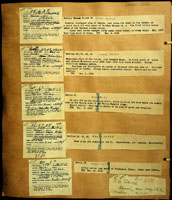
Dranga
Kauaʻi · Nov – Dec 1926
Dranga in Kauaʻi, November – December 192674 specimens · 3 stops · 17 days · 27 km
Clarence H. Cooke Jr.
Molokaʻi · 22–26 Dec 1922
Clarence H. Cooke Jr. in Molokaʻi, 22–26 December 192287 specimens · 3 stops · 5 days · 51 km


Ernest H. Quayle
8 islands · Dec 1921 – Feb 1922
Ernest H. Quayle across 8 islands, December 1921 – February 192246 specimens · 12 stops · 57 days · 6,573 km
Ted E. should Be D. Dranga
Hawaiʻi Island · Jan – Feb 1923
Ted E. should Be D. Dranga in Hawaiʻi Island, January – February 1923108 specimens · 2 stops · 5 days · 108 km


C.C. Curtis
6 islands · Apr – May 1922
C.C. Curtis across 6 islands, April – May 192263 specimens · 6 stops · 15 days · 21 km


C.C. Curtis
9 islands of French Polynesia · 5–29 Jun 1922
C.C. Curtis across 9 islands of French Polynesia, 5–29 June 192266 specimens · 9 stops · 25 days
L.A. Thurston L.A. ThurstonL.A. Thurston
Pearl and Hermes Atoll and Nihoa · 1–6 Apr 1927
L.A. Thurston L.A. ThurstonL.A. Thurston in Pearl and Hermes Atoll and Nihoa, 1–6 April 1927102 specimens · 2 stops · 6 days · 1,490 km


A.M. Stokes
Raivavae · Mar – Apr 1922
A.M. Stokes in Raivavae, March – April 192255 specimens · 6 stops · 37 days
Ted E. should Be D. Dranga
Hawaiʻi Island · Jan – Feb 1924
Ted E. should Be D. Dranga in Hawaiʻi Island, January – February 192468 specimens · 3 stops · 18 days · 196 km


Stanley Ball
Oʻahu · Oct 1925 – Feb 1926
Stanley Ball in Oʻahu, October 1925 – February 192643 specimens · 21 stops · 123 days
Alex B. Anderson
Pearl and Hermes Atoll and Nihoa · 1–6 Apr 1927
Alex B. Anderson in Pearl and Hermes Atoll and Nihoa, 1–6 April 192799 specimens · 2 stops · 6 days · 1,490 km
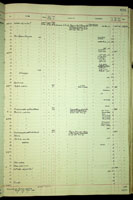
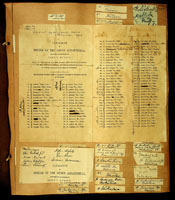
 Alfred F. Judd Jr
3 islands · Feb – Mar 1926
Alfred F. Judd Jr in Tutuila, Lānaʻi and Ofu, February – March 192643 specimens · 6 stops · 46 days · 4,276 km
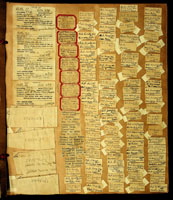
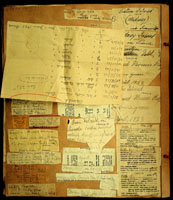
D. Cmc Jr.
3 islands · 1–17 Jun 1923
D. Cmc Jr. in Nihoa, Mokumanamana and Lisianski, 1–17 June 192350 specimens · 5 stops · 17 days · 1,520 km
 Erling Christopherson
Upolu · 5–15 Aug 1929
Erling Christopherson in Upolu, 5–15 August 192968 specimens · 3 stops · 11 days · 8 km
Hans George Hornbostel
Tinian · 1–23 May 1924
Hans George Hornbostel in Tinian, 1–23 May 192477 specimens · 2 stops · 23 days


Edwin Horace Bryan Jr.
Oʻahu · 1–21 Apr 1929
Edwin Horace Bryan Jr. in Oʻahu, 1–21 April 192952 specimens · 5 stops · 21 days · 429 km
Edwin Horace Bryan Jr.
Molokaʻi · 18–23 Dec 1925
Edwin Horace Bryan Jr. in Molokaʻi, 18–23 December 192594 specimens · 3 stops · 6 days · 2 km
Clarence H. Cooke Jr.
Molokaʻi · Dec 1923 – Jan 1924
Clarence H. Cooke Jr. in Molokaʻi, December 1923 – January 192485 specimens · 2 stops · 6 days · 1 km


Tanager Expedition
10 islands of the United States · Apr – Jun 1923
Tanager Expedition, April – June 192360 specimens · 8 stops · 62 days · 2,174 km
E.S.C. Handy
Upolu · Feb – Mar 1923
E.S.C. Handy in Upolu, February – March 192348 specimens · 4 stops · 17 days
Harry S. Ladd
Viti Levu · Jul – Aug 1926
Harry S. Ladd in Viti Levu, July – August 192658 specimens · 3 stops · 12 days · 2,114 km
Mrs. P.H. Buck
Aug – Sep 1929
Mrs. P.H. Buck, August – September 192971 specimens · 2 stops · 9 days
 Kenneth Pike Emory
3 islands · Sep – Nov 1925
Kenneth Pike Emory in Moorea, Tahiti and Huahine, September – November 192546 specimens · 3 stops · 38 days · 189 km
How a journey is found
Every specimen with a full date (year, month and day; a bare “1 January” is treated as a missing day) and a named collector is a diary entry. For each collector the days are read in order, each day given the place most of its labels name. The place where a collector spent more than forty percent of their days, and at least sixty of them, is home: days there are left out.
A gap of more than 21 days between collecting days ends one journey and begins the next. A journey must run five to four hundred days, hold at least forty specimens and touch at least two places. Within it, consecutive days inside the same or a neighbouring tenth-of-a-degree cell (about eleven kilometres) are one stop; the stop’s point is the mean of its labels’ coordinates, or the island’s centre when none carry any.
Companions are collectors whose own labels put them in the same cell on the same days. Staff can name a journey, write about it, feature it or hide it; those words survive every rebuild. Everything else is read off the specimens and rebuilt by harvest.mjs expeditions as the records improve.