
Journeys
The expeditions, reassembled
Every dated label is a diary entry. Read a collector’s labels in order and the voyage comes back: the islands in sequence, the days at each, the specimens from every stop. 516 journeys so far, 1882 to 2003, 203,239 specimens between them.
225 collectors and expeditions9,587 days in the field2,429,515 km between stops172,106 photographed specimens
516 journeys match
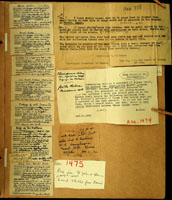


 E.P. Hume
Kauaʻi · Dec 1930 – Jan 1931
E.P. Hume in Kauaʻi, December 1930 – January 1931103 specimens · 10 stops · 15 days · 131 km
Edward Yataro Hosaka
Kauaʻi · Dec 1930 – Jan 1931
Edward Yataro Hosaka in Kauaʻi, December 1930 – January 1931101 specimens · 10 stops · 15 days · 131 km
Mary Eleanor King
Niʻihau and Kauaʻi · 11–22 Sep 1959
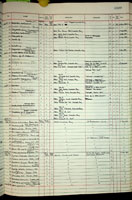
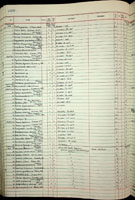
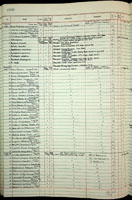
Mary Eleanor King in Niʻihau and Kauaʻi, 11–22 September 1959237 specimens · 2 stops · 12 days · 90 km
Yoshio KondoKay Kondo
Oʻahu and Molokaʻi · Jul – Aug 1961
Yoshio KondoKay Kondo in Oʻahu and Molokaʻi, July – August 1961147 specimens · 3 stops · 44 days · 187 km
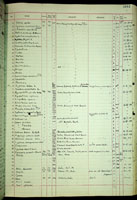
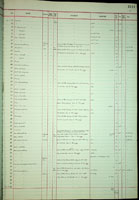
Yoshio KondoKay Kondo
Oʻahu and Kauaʻi · Jan – Mar 1947
Yoshio KondoKay Kondo in Oʻahu and Kauaʻi, January – March 194792 specimens · 7 stops · 70 days · 539 km
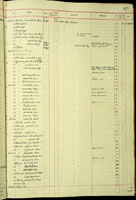


Erling Christophersen
8 islands · Jun – Sep 1924
Erling Christophersen across 8 islands, June – September 192481 specimens · 18 stops · 111 days · 15,205 km
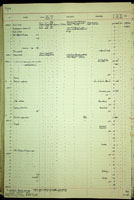
Dranga
Tutuila and Tau · Feb – Mar 1926
Dranga in Tutuila and Tau, February – March 1926151 specimens · 3 stops · 29 days · 144 km
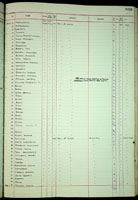
Pele Expedition 1963
Oʻahu · 1–26 Jun 1963
Pele Expedition 1963, 1–26 June 1963151 specimens · 3 stops · 26 days · 257 km


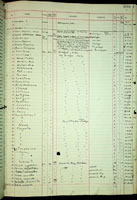
Yoshio KondoKay Kondo
4 islands · May – Aug 1962
Yoshio KondoKay Kondo across 4 islands, May – August 196276 specimens · 12 stops · 89 days · 12,838 km

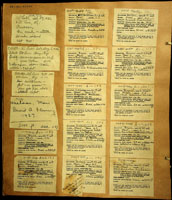
Otto Herman Swezey
Maui and Molokaʻi · Dec 1928 – Feb 1929
Otto Herman Swezey in Maui and Molokaʻi, December 1928 – February 1929130 specimens · 11 stops · 61 days · 104 km
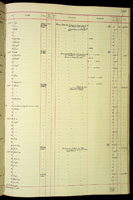
Marie Catherine Neal
Kauaʻi · 1–20 Sep 1921
Marie Catherine Neal in Kauaʻi, 1–20 September 1921153 specimens · 3 stops · 20 days · 38 km
Clarence H. Cooke Jr.
Maui · 1–18 Feb 1904
Clarence H. Cooke Jr. in Maui, 1–18 February 1904120 specimens · 5 stops · 18 days · 119 km
Dinau Yalikanathea
5 islands · Aug – Sep 1968
Dinau Yalikanathea across 5 islands, August – September 1968124 specimens · 5 stops · 14 days · 1,339 km
Malacology Staff
Oʻahu · Jul – Aug 1939
Malacology Staff, July – August 1939184 specimens · 2 stops · 27 days · 28 km
Hume Wilder
Oʻahu · Jan – Apr 1931
Hume Wilder in Oʻahu, January – April 193183 specimens · 7 stops · 89 days · 646 km
Jane Lathrop Winne
Oʻahu and Hawaiʻi Island · Dec 1935 – Feb 1936
Jane Lathrop Winne in Oʻahu and Hawaiʻi Island, December 1935 – February 1936121 specimens · 4 stops · 33 days · 603 km


Pakki A. Reath
Maui and Hawaiʻi Island · Mar – Apr 2003
Pakki A. Reath in Maui and Hawaiʻi Island, March – April 2003271 specimens · 5 stops · 6 days · 260 km


Charles N. Forbes
Oʻahu · Oct – Nov 1914
Charles N. Forbes in Oʻahu, October – November 1914109 specimens · 5 stops · 37 days
A. Gouveia A. Gouveia A. Gouveia v A. Gouveia
Oʻahu · Apr – Jun 1917
A. Gouveia A. Gouveia A. Gouveia v A. Gouveia in Oʻahu, April – June 191794 specimens · 5 stops · 87 days · 276 km


Pakki A. Reath
Kauaʻi · 11–16 Nov 2002
Pakki A. Reath in Kauaʻi, 11–16 November 2002294 specimens · 4 stops · 6 days · 170 km


Otto Herman Swezey
3 islands of the United States · Mar – Jul 1920
Otto Herman Swezey in Oʻahu, Maui and Kauaʻi, March – July 1920103 specimens · 19 stops · 129 days · 191 km
Lieut. David F. Grether
3 islands · 2–28 Jul 1946
Lieut. David F. Grether in Manus Island, Rota and Los Negros, 2–28 July 194699 specimens · 6 stops · 27 days · 3,715 km

T.A. Jaggar Jr
Niuafo'Ou Island · Aug – Oct 1930
T.A. Jaggar Jr in Niuafo'Ou Island, August – October 1930100 specimens · 8 stops · 34 days


Maxwell S. Doty
3 islands · 1–28 Aug 1955
Maxwell S. Doty in Maui, Hawaiʻi Island and Yoron Island, 1–28 August 195594 specimens · 8 stops · 28 days · 397 km
How a journey is found
Every specimen with a full date (year, month and day; a bare “1 January” is treated as a missing day) and a named collector is a diary entry. For each collector the days are read in order, each day given the place most of its labels name. The place where a collector spent more than forty percent of their days, and at least sixty of them, is home: days there are left out.
A gap of more than 21 days between collecting days ends one journey and begins the next. A journey must run five to four hundred days, hold at least forty specimens and touch at least two places. Within it, consecutive days inside the same or a neighbouring tenth-of-a-degree cell (about eleven kilometres) are one stop; the stop’s point is the mean of its labels’ coordinates, or the island’s centre when none carry any.
Companions are collectors whose own labels put them in the same cell on the same days. Staff can name a journey, write about it, feature it or hide it; those words survive every rebuild. Everything else is read off the specimens and rebuilt by harvest.mjs expeditions as the records improve.