
Journeys
The expeditions, reassembled
Every dated label is a diary entry. Read a collector’s labels in order and the voyage comes back: the islands in sequence, the days at each, the specimens from every stop. 516 journeys so far, 1882 to 2003, 203,239 specimens between them.
225 collectors and expeditions9,587 days in the field2,429,515 km between stops172,106 photographed specimens
516 journeys match
Fosberg F. Raymond
Kauaʻi · 25–30 Dec 1933
Fosberg F. Raymond in Kauaʻi, 25–30 December 193369 specimens · 2 stops · 6 days · 35 km
H.G. Barnacle
1–28 Sep 1882
H.G. Barnacle, 1–28 September 188244 specimens · 3 stops · 28 days
Joseph Swift Emerson
1–28 Sep 1882
Joseph Swift Emerson, 1–28 September 188244 specimens · 3 stops · 28 days
Ignacia Benevente
Rota and Saipan · 20–26 Jun 1952
Ignacia Benevente in Rota and Saipan, 20–26 June 195265 specimens · 2 stops · 7 days · 128 km


Alex B. Anderson
3 islands of French Polynesia · 8–26 Aug 1934
Alex B. Anderson in Tubuai, Rurutu and Raivavae, 8–26 August 193440 specimens · 5 stops · 19 days · 411 km


Noel Louis Hilmer Krauss
3 islands · Feb – Apr 1985
Noel Louis Hilmer Krauss in Guadalcanal, Viti Levu and Ghizo, February – April 198550 specimens · 4 stops · 50 days · 1,277 km
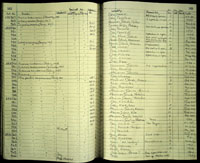
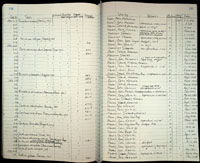
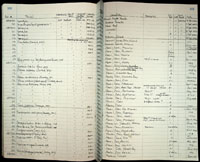
Grace Burgess Grace Burgess
Hawaiʻi Island · 1–19 Jun 1945
Grace Burgess Grace Burgess in Hawaiʻi Island, 1–19 June 194571 specimens · 2 stops · 19 days · 285 km
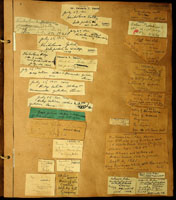


Otto Herman Swezey
Oʻahu and Hawaiʻi Island · May – Jun 1919
Otto Herman Swezey in Oʻahu and Hawaiʻi Island, May – June 191953 specimens · 6 stops · 31 days · 232 km
 Kenneth Pike Emory
3 islands · 14–28 Apr 1925
Kenneth Pike Emory in Raiatea, Tahiti and Taha'A, 14–28 April 192543 specimens · 3 stops · 15 days · 269 km
C.W. Isle
Oʻahu · May – Jun 1936
C.W. Isle in Oʻahu, May – June 193658 specimens · 2 stops · 7 days · 31 km
G. Whiting
Oʻahu · 12–23 Jan 1929
G. Whiting in Oʻahu, 12–23 January 192953 specimens · 2 stops · 12 days · 41 km


Patrick V. Kirch
Niuatoputapu Island · 13–19 Jul 1976
Patrick V. Kirch in Niuatoputapu Island, 13–19 July 197664 specimens · 4 stops · 7 days
George McGowan
Oʻahu · Apr – May 1933
George McGowan in Oʻahu, April – May 193340 specimens · 3 stops · 15 days · 134 km

Brenda Bishop
3 islands of the United States · 3–18 Aug 1963
Brenda Bishop in Molokaʻi, Oʻahu and Kauaʻi, 3–18 August 196349 specimens · 2 stops · 16 days · 50 km
Zaca Exp
Tutuila and Savaii · 1–25 Oct 1936
Zaca Exp in Tutuila and Savaii, 1–25 October 193646 specimens · 2 stops · 25 days · 207 km
D'Alte A. Welch
Hawaiʻi Island · Dec 1935 – Jan 1936
D'Alte A. Welch in Hawaiʻi Island, December 1935 – January 193656 specimens · 2 stops · 6 days · 87 km
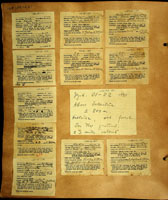

Erling Christophersen
Tutuila and Upolu · 24–29 Jun 1931
Erling Christophersen in Tutuila and Upolu, 24–29 June 193153 specimens · 3 stops · 6 days · 145 km
Alice T. Cooke
Maui · 25–29 May 1915
Alice T. Cooke in Maui, 25–29 May 191555 specimens · 2 stops · 5 days · 38 km
and Mrs. Murnan
Oʻahu · 15–19 Mar 1948
and Mrs. Murnan in Oʻahu, 15–19 March 194854 specimens · 2 stops · 5 days · 154 km
George F. Arnemann
Kauaʻi · 19–23 Jan 1948
George F. Arnemann in Kauaʻi, 19–23 January 194854 specimens · 2 stops · 5 days · 39 km
Anthony Polansky
Oʻahu · Jan – Feb 1964
Anthony Polansky in Oʻahu, January – February 196445 specimens · 2 stops · 18 days
W. Harry Lange
Saipan · Mar – Apr 1948
W. Harry Lange in Saipan, March – April 194847 specimens · 2 stops · 33 days · 126 km
George F. Arnemann
Kauaʻi · 2–22 May 1948
George F. Arnemann in Kauaʻi, 2–22 May 194843 specimens · 2 stops · 21 days
Ben Olivera
Oʻahu · May – Jun 1917
Ben Olivera in Oʻahu, May – June 191743 specimens · 2 stops · 19 days · 157 km
How a journey is found
Every specimen with a full date (year, month and day; a bare “1 January” is treated as a missing day) and a named collector is a diary entry. For each collector the days are read in order, each day given the place most of its labels name. The place where a collector spent more than forty percent of their days, and at least sixty of them, is home: days there are left out.
A gap of more than 21 days between collecting days ends one journey and begins the next. A journey must run five to four hundred days, hold at least forty specimens and touch at least two places. Within it, consecutive days inside the same or a neighbouring tenth-of-a-degree cell (about eleven kilometres) are one stop; the stop’s point is the mean of its labels’ coordinates, or the island’s centre when none carry any.
Companions are collectors whose own labels put them in the same cell on the same days. Staff can name a journey, write about it, feature it or hide it; those words survive every rebuild. Everything else is read off the specimens and rebuilt by harvest.mjs expeditions as the records improve.