
Journeys
The expeditions, reassembled
Every dated label is a diary entry. Read a collector’s labels in order and the voyage comes back: the islands in sequence, the days at each, the specimens from every stop. 269 journeys so far, 1930 to 1940, 124,246 specimens between them.
144 collectors and expeditions5,286 days in the field971,237 km between stops113,490 photographed specimens
269 journeys match
Wray Harris
Tau and Upolu · Jul – Aug 1937
Wray Harris in Tau and Upolu, July – August 1937127 specimens · 3 stops · 31 days · 512 km
Robert L. Usinger
Guam · 2–27 Jun 1936
Robert L. Usinger in Guam, 2–27 June 1936112 specimens · 4 stops · 26 days · 51,067 km
Rokuro Yamaguchi
Oʻahu · 5–19 May 1936
Rokuro Yamaguchi in Oʻahu, 5–19 May 1936172 specimens · 2 stops · 15 days · 154 km
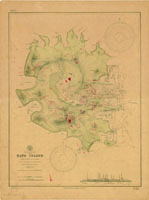
Kondo
3 islands · Jul – Aug 1934
Kondo in Tupuai, Rapa and Raivavae, July – August 1934115 specimens · 3 stops · 51 days · 721 km


Y. Iwasaki
Hawaiʻi Island · Jan – Apr 1930
Y. Iwasaki in Hawaiʻi Island, January – April 193053 specimens · 16 stops · 103 days · 99 km


Otto Degener
Oʻahu · Jan – May 1938
Otto Degener in Oʻahu, January – May 193855 specimens · 14 stops · 109 days


Y. Nitta
Oʻahu · May – Jul 1932
Y. Nitta in Oʻahu, May – July 193272 specimens · 8 stops · 52 days
Rokuro Yamaguchi
Oʻahu · Oct – Nov 1935
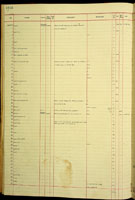
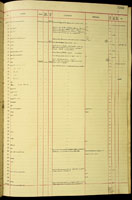
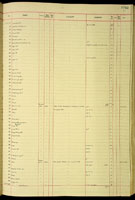
Rokuro Yamaguchi in Oʻahu, October – November 1935151 specimens · 2 stops · 27 days · 16 km


Takamoto
Oʻahu · Feb – May 1936
Takamoto in Oʻahu, February – May 193653 specimens · 14 stops · 101 days
Pacific Entomological Survey
Nuku Hiva · May – Jun 1931
Pacific Entomological Survey, May – June 1931105 specimens · 4 stops · 24 days · 6 km


Otto Herman Swezey
3 islands of the United States · May – Jul 1932
Otto Herman Swezey in Kauaʻi, Oʻahu and Molokaʻi, May – July 193269 specimens · 23 stops · 54 days · 540 km
Alex B. Anderson
3 islands · Sep – Oct 1934
Alex B. Anderson in Raiatea, Moorea and Taha'A, September – October 1934126 specimens · 3 stops · 17 days · 211 km


Tachun
Borneo and Sarawak · Jul – Oct 1938
Tachun in Borneo and Sarawak, July – October 193846 specimens · 21 stops · 84 days
Erling Christophersen
Oʻahu · Apr – May 1932
Erling Christophersen in Oʻahu, April – May 1932111 specimens · 4 stops · 12 days · 308 km


Donald Mitchell
Kauaʻi and Oʻahu · Nov 1930 – Jan 1931
Donald Mitchell in Kauaʻi and Oʻahu, November 1930 – January 193164 specimens · 10 stops · 36 days · 254 km


 C.E. Hartt
Maui and Hawaiʻi Island · 6–18 Aug 1933
C.E. Hartt in Maui and Hawaiʻi Island, 6–18 August 193393 specimens · 6 stops · 13 days · 136 km

Edward Yataro Hosaka
5 islands of the United States · Jul – Aug 1931
Edward Yataro Hosaka across 5 islands of the United States, July – August 193182 specimens · 6 stops · 24 days · 1,149 km


Amy Suehiro
Oʻahu · Sep – Nov 1932
Amy Suehiro in Oʻahu, September – November 193281 specimens · 5 stops · 46 days
Tuatoko
Rotuma · 1–26 Aug 1938
Tuatoko in Rotuma, 1–26 August 1938106 specimens · 3 stops · 26 days · 1,107 km


Otto Degener
Oʻahu · Jan – Jun 1933
Otto Degener in Oʻahu, January – June 193341 specimens · 17 stops · 136 days · 1,199 km


F. Salucop
Maui · Jul – Aug 1939
F. Salucop in Maui, July – August 193958 specimens · 10 stops · 36 days · 189 km


Lynette Williams
Molokaʻi · Dec 1938 – Jan 1939
Lynette Williams in Molokaʻi, December 1938 – January 193997 specimens · 4 stops · 15 days · 37 km
F.O. Heine
Oʻahu · Feb – Mar 1933
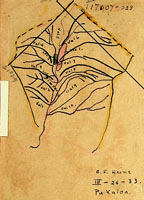
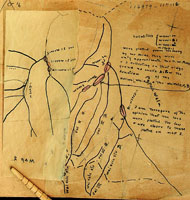
F.O. Heine in Oʻahu, February – March 193385 specimens · 4 stops · 33 days · 154 km
Robert L. Usinger
Oʻahu · Feb – May 1936
Robert L. Usinger in Oʻahu, February – May 193662 specimens · 9 stops · 83 days · 6,521 km
How a journey is found
Every specimen with a full date (year, month and day; a bare “1 January” is treated as a missing day) and a named collector is a diary entry. For each collector the days are read in order, each day given the place most of its labels name. The place where a collector spent more than forty percent of their days, and at least sixty of them, is home: days there are left out.
A gap of more than 21 days between collecting days ends one journey and begins the next. A journey must run five to four hundred days, hold at least forty specimens and touch at least two places. Within it, consecutive days inside the same or a neighbouring tenth-of-a-degree cell (about eleven kilometres) are one stop; the stop’s point is the mean of its labels’ coordinates, or the island’s centre when none carry any.
Companions are collectors whose own labels put them in the same cell on the same days. Staff can name a journey, write about it, feature it or hide it; those words survive every rebuild. Everything else is read off the specimens and rebuilt by harvest.mjs expeditions as the records improve.