
Journeys
The expeditions, reassembled
Every dated label is a diary entry. Read a collector’s labels in order and the voyage comes back: the islands in sequence, the days at each, the specimens from every stop. 281 journeys so far, 1970 to 1980, 35,652 specimens between them.
147 collectors and expeditions4,651 days in the field852,009 km between stops26,601 photographed specimens
281 journeys match


A. Gebo
New Guinea and Papua · Jun – Jul 1972
A. Gebo in New Guinea and Papua, June – July 1972118 specimens · 11 stops · 15 days · 569 km


Derral R. Herbst
6 islands of the United States · Jul – Sep 1978
Derral R. Herbst across 6 islands of the United States, July – September 197897 specimens · 10 stops · 65 days · 2,116 km


P. Katik
Manus Island and Umboi Island · Sep – Nov 1974
P. Katik in Manus Island and Umboi Island, September – November 1974100 specimens · 10 stops · 58 days · 978 km


L. Yoshida
Kauaʻi and Hawaiʻi Island · Jul – Sep 1979
L. Yoshida in Kauaʻi and Hawaiʻi Island, July – September 1979111 specimens · 6 stops · 79 days · 1,711 km


B. Kimura
4 islands of the United States · Jun – Aug 1978
B. Kimura across 4 islands of the United States, June – August 197885 specimens · 15 stops · 50 days · 598 km


ESP Field Crew
Hawaiʻi Island and Kauaʻi · Jul – Oct 1979
ESP Field Crew, July – October 1979105 specimens · 7 stops · 94 days · 1,846 km


R.S. Isles
New Britain and Ott Island · May – Jun 1973
R.S. Isles in New Britain and Ott Island, May – June 1973103 specimens · 10 stops · 38 days · 784 km
Kenneth M. Nagata
3 islands of the United States · Jun – Aug 1978
Kenneth M. Nagata in Hawaiʻi Island, Maui and Molokaʻi, June – August 197886 specimens · 15 stops · 44 days · 639 km


 W.H. Magruder
Kauaʻi · 1–21 Sep 1979
W.H. Magruder in Kauaʻi, 1–21 September 1979138 specimens · 10 stops · 21 days · 834 km


C. Corn
Oʻahu and Kahoʻolawe · Jan – Mar 1978
C. Corn in Oʻahu and Kahoʻolawe, January – March 1978109 specimens · 6 stops · 82 days · 283 km


Luther E. Bishop
Kauaʻi and Oʻahu · May – Jun 1972
Luther E. Bishop in Kauaʻi and Oʻahu, May – June 1972107 specimens · 9 stops · 15 days · 254 km


F.R. Warshauer
Molokaʻi and Maui · Jun – Jul 1979
F.R. Warshauer in Molokaʻi and Maui, June – July 1979108 specimens · 9 stops · 34 days · 18 km


J.D. Jacobi
Molokaʻi · Jun – Jul 1979
J.D. Jacobi in Molokaʻi, June – July 1979100 specimens · 10 stops · 50 days · 64 km
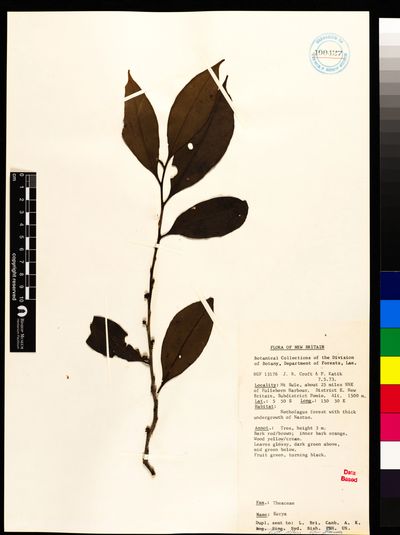


P. Katik
New Britain and Poi Island · May – Jun 1973
P. Katik in New Britain and Poi Island, May – June 1973104 specimens · 8 stops · 35 days · 536 km


Derral R. Herbst
3 islands of the United States · Sep – Oct 1973
Derral R. Herbst in Lānaʻi, Oʻahu and Molokaʻi, September – October 197396 specimens · 9 stops · 30 days · 73 km


Noel Louis Hilmer Krauss
13 islands · Dec 1976 – Apr 1977
Noel Louis Hilmer Krauss across 13 islands, December 1976 – April 197788 specimens · 27 stops · 104 days · 15,072 km


Reino Fagersten
Finland · May – Sep 1973
Reino Fagersten in Finland, May – September 197363 specimens · 16 stops · 118 days


van Royen
Java and Australia · Nov 1974 – Jan 1975
van Royen in Java and Australia, November 1974 – January 197589 specimens · 8 stops · 62 days


Derral R. Herbst
3 islands of the United States · Apr – Jun 1978
Derral R. Herbst in Oʻahu, Hawaiʻi Island and Kauaʻi, April – June 1978102 specimens · 6 stops · 43 days · 778 km


G.P. Buelow
8 islands of Tonga · Apr – Aug 1978
G.P. Buelow across 8 islands of Tonga, April – August 197870 specimens · 38 stops · 148 days


G.P. Buelow
5 islands of Tonga · Jan – May 1979
G.P. Buelow across 5 islands of Tonga, January – May 197973 specimens · 28 stops · 121 days


Y. Lelean
New Britain and Poi Island · May – Jun 1973
Y. Lelean in New Britain and Poi Island, May – June 197395 specimens · 8 stops · 38 days · 661 km


William Robert Barker
New Guinea · Mar – May 1975
William Robert Barker in New Guinea, March – May 1975138 specimens · 3 stops · 82 days · 706 km


P. Katik
3 islands of Papua New Guinea · 1–29 Mar 1979
P. Katik in Rossel Island, Tagula Island and Misima Island, 1–29 March 197997 specimens · 9 stops · 29 days · 570 km
How a journey is found
Every specimen with a full date (year, month and day; a bare “1 January” is treated as a missing day) and a named collector is a diary entry. For each collector the days are read in order, each day given the place most of its labels name. The place where a collector spent more than forty percent of their days, and at least sixty of them, is home: days there are left out.
A gap of more than 21 days between collecting days ends one journey and begins the next. A journey must run five to four hundred days, hold at least forty specimens and touch at least two places. Within it, consecutive days inside the same or a neighbouring tenth-of-a-degree cell (about eleven kilometres) are one stop; the stop’s point is the mean of its labels’ coordinates, or the island’s centre when none carry any.
Companions are collectors whose own labels put them in the same cell on the same days. Staff can name a journey, write about it, feature it or hide it; those words survive every rebuild. Everything else is read off the specimens and rebuilt by harvest.mjs expeditions as the records improve.